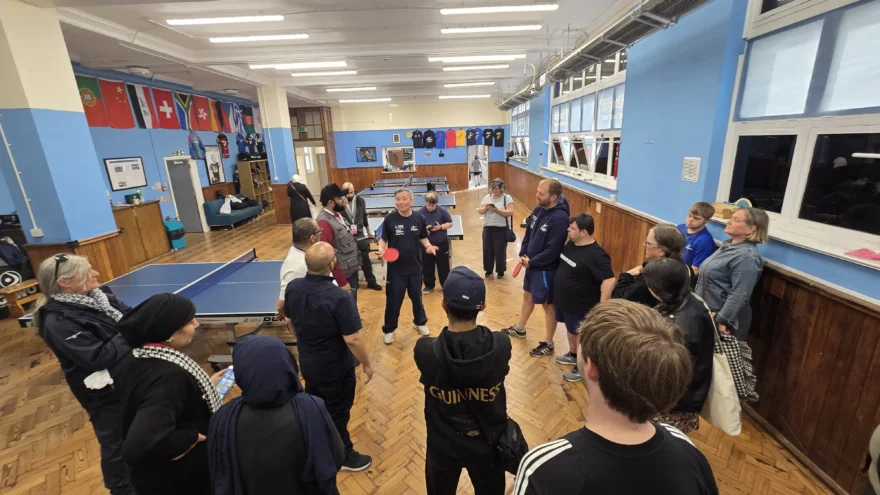
Welcoming a brilliant group of leaders from Saudi Arabia to explore charity management, leadership, and community engagement in the UK was a real privilege. Organised by Meld Impact, this study visit brought together 25 leaders of not-for-profit organisations — each with a hunger to learn, connect, and share.
Over several days, we visited inspiring grassroots initiatives — from Big Local Works, Bermondsey Community Kitchen, and Start Up Discovery School in London, to The Crew Club, East Brighton Food Co-op, and Brighton Table Tennis Club on the south coast. Each organisation offered generous insights into sustainability, leadership, and staying deeply rooted in community need. We closed the visit with a vibrant gathering at Impact Hub Euston.
As a facilitator, it was a joy to witness moments of recognition, challenge, and shared purpose. Whether over a plate of food, a walk through a neighbourhood, or a rallying story from a local leader, powerful learning emerged through honest, human conversation.
These visits reminded me how universal the desire is to create positive change with and for our communities. Despite differing cultural, political, and economic contexts, the questions leaders ask — and the values they lead with — are often strikingly similar.
Recent research continues to affirm the transformative power of peer learning across cultural contexts. A 2024 international study on peer leadership in higher education found that participants across diverse regions experienced significant personal and professional growth through their roles, highlighting the universal benefits of such engagements. Similarly, insights from the European Conference on Knowledge Management emphasise how communities of practice can foster peer-driven transformational leadership, promoting collective growth through shared experiences. These findings resonate with the enriching exchanges we witnessed — where leaders from varied backgrounds came together to learn, share, and grow collectively.
Cross-cultural peer learning encourages us to move beyond assumptions and adopt a more reflective approach to leadership. It enables leaders to test ideas, exchange practices, and adapt strategies in response to new contexts. And perhaps most importantly, it fosters humility — an essential quality in any effective leader.
Thank you to everyone who opened their doors, shared their stories, and created space for this exchange to flourish. I left with a renewed belief in the power of learning together — not despite our differences, but because of them.